
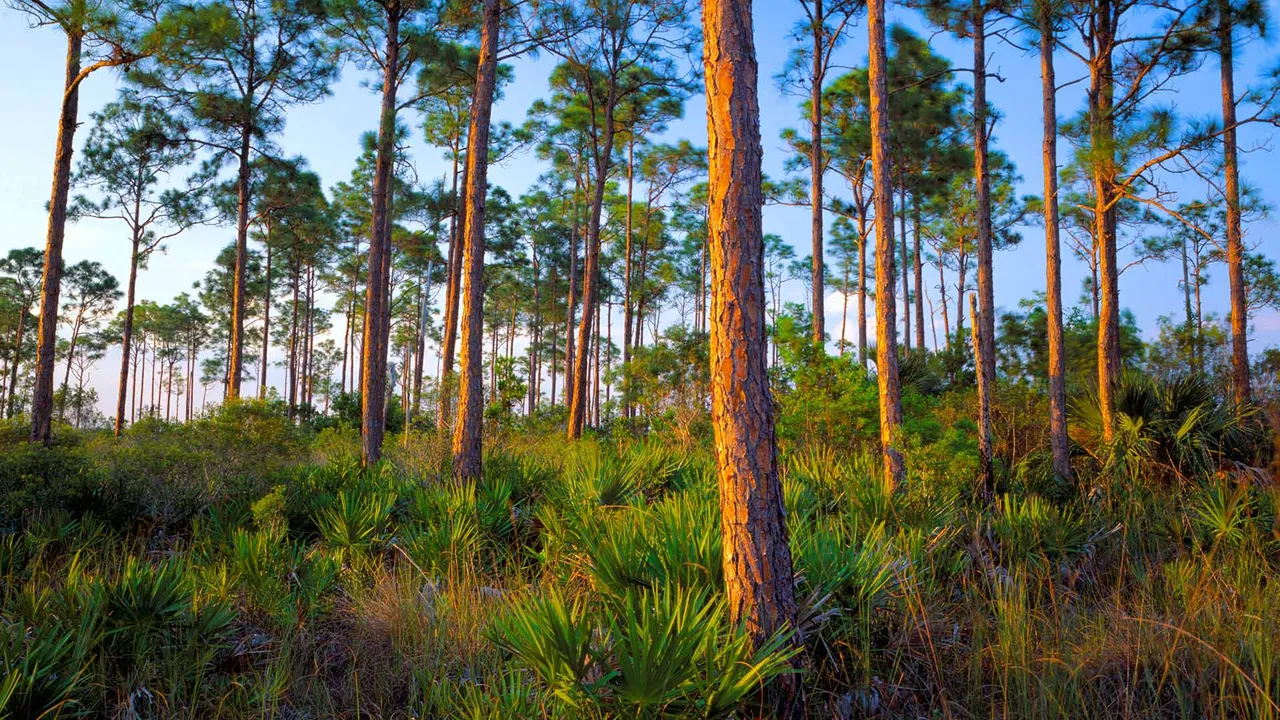
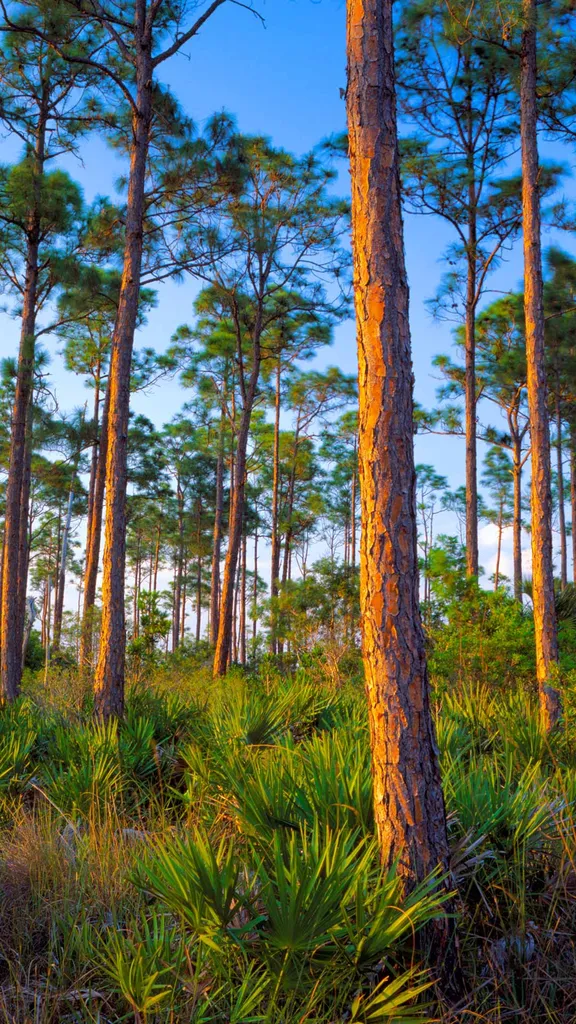
Forest hammock of slash pine and saw palmetto, Everglades National Park, Florida, United States (© Mary Liz Austin/Alamy)
What happens when water moves too slowly to notice? In Everglades National Park, it shapes everything. Covering around 6,100 square kilometres, the park was established in 1947 to protect a wetland system unlike any other in the United States. As a recognised UNESCO World Heritage Site, the park's elevated pinelands rise above the marshes and prairies that form one of the world's largest wetland systems.
Seen here, sunlit slash pines and saw palmetto create open woodlands that contrast sharply with the Everglades' vast wetlands and mangrove forests. These higher, drier areas support plant and animal communities that cannot survive in flooded conditions. The park also shelters a wide range of wildlife, from American alligators to elusive Florida panthers, along with hundreds of bird species. It is one of the few places in the world where alligators and crocodiles coexist, reflecting the overlap of freshwater and coastal environments. Ongoing conservation efforts aim to restore natural water flow, which remains essential to the park's survival.